- All
- Product Name
- Product Keyword
- Product Model
- Product Summary
- Product Description
- Multi Field Search

Views: 0 Author: Site Editor Publish Time: 2026-06-05 Origin: Site


Precision pin molds operate as critical engineering risk zones rather than commodity tooling components. In high-stakes manufacturing environments, the financial penalty of a single failed pin exponentially outweighs your initial tooling investment. Industry leaders no longer evaluate suppliers solely on unit cost. Instead, they prioritize long-term dimensional stability and verifiable process control. Securing reliable Pin Molds requires you to look far beyond basic RFQs. You must actively scrutinize a manufacturer’s statistical process control data. You need to verify their material science capabilities. You also have to demand strict alignment to industry-specific compliance frameworks. We will explore how hidden variables trigger catastrophic assembly failures. You will learn the specific engineering thresholds defining true precision. We also detail a robust five-step quality control framework to guarantee batch stability over short-term samples.
Precision pins are failure multipliers; minor deviations in straightness or concentricity lead to assembly interference and accelerated wear.
Medical and automotive applications demand distinct validation protocols, ranging from grease-free cleanroom operation to PPAP readiness.
Verifiable precision relies on objective machine capabilities (e.g., ±2μm Wire EDM accuracy, CMM validation), not subjective supplier claims.
A rigorous, 5-step quality control framework (from IQC to FQC) is mandatory for ensuring long-term batch stability over short-term "perfect" first-article samples.
Low-cost suppliers frequently mask the long-term hidden costs of dimensional drift. You might save capital on the initial tooling invoice. However, slight inaccuracies eventually surface during high-volume production. Dimensional drift creeps into the process as thermal stress alters the metal. This reality results in extensive secondary validation efforts. You end up halting assembly lines to perform constant tooling adjustments. These hidden expenses quickly destroy any upfront savings.
Understanding pin mold complexities requires differentiating A-Side from B-Side engineering logic. The A-Side represents the cavity. It forms the external appearance of the plastic part. Engineers focus on surface finish and cosmetic perfection here. The B-Side represents the core and ejection system. It handles the brutal internal geometry. Pins located on the B-Side endure intense structural stress. They absorb the massive pressure of incoming molten resin. They must resist bending while maintaining exact alignment during the ejection phase.
Systemic failure points rarely announce themselves immediately. They cascade through your production line. Consider the following common failure triggers:
Coating Thickness Deviations: Uneven anti-galling coatings alter the outer diameter. This causes binding inside the mold base.
Thermal Drift: Inadequate cooling channels inside the pin cause heat accumulation. The pin expands beyond its tolerance window.
Concentricity Errors: A pin spinning off-center creates uneven wall thicknesses. Tight-tolerance plastic housings will warp upon cooling.
Micro-Flash Generation: Poorly fitted pins allow plastic to seep into gaps. This creates flash and mandates costly secondary trimming.
Medical injection molding operates under zero-failure mandates. You must demand surgical-grade stainless steel for your mold inserts. Material like 420SS provides exceptional corrosion resistance. Suppliers must operate under strict ISO 13485 and ISO 9001 frameworks. Every component requires absolute traceability. A microscopic flaw in a syringe core pin compromises patient safety.
Particulate prevention dictates specific surface treatments. Medical molds operate inside ISO Class 7 or Class 8 cleanrooms. You cannot use traditional greases to lubricate ejector pins. Moving parts require grease-free operation. Engineers achieve this using ion-nitrided surfaces. They apply advanced anti-galling coatings like Titanium Nitride (TiN) or Silicon Boron Nitride (SBN). These coatings prevent metal-on-metal friction. They eliminate micro-particle shedding entirely.
Automotive device housings demand relentless high-volume output. A dashboard sensor housing might run millions of cycles annually. This requires a robust validation framework. Suppliers must achieve complete PPAP (Production Part Approval Process) readiness. You need comprehensive documentation outlining Failure Mode and Effects Analysis (FMEA) and control plans.
Structural integrity remains the top automotive engineering priority. Pin molds face aggressive, highly filled resins like glass-reinforced nylon. These materials act like sandpaper during injection. Engineers must design core pins to withstand intense resin flows without deflecting. Maintaining alignment longevity ensures automotive components mate perfectly during robotic assembly operations.
The electronics sector pushes machining limits through micro-molding. Sensor arrays, battery connectors, and PCB interfaces require astonishingly small features. You frequently need micro-diameter pins dropping down to 0.003 inches. Machining a piece of steel this thin requires extraordinary vibration control.
Thermal and stress management become critical hurdles. Electronic setups often utilize complex, multi-cavity molds. High-temperature resins like LCP or PEEK flow around delicate micro-pins. Uneven heat dissipation causes immediate warpage in the final connector. Consistent cooling channels must exist even near micro-scale components.
Industry Sector | Primary Standard | Key Engineering Challenge | Critical Material / Coating |
|---|---|---|---|
Medical & Healthcare | ISO 13485 / Zero-Failure | Particulate prevention in cleanrooms | 420SS / TiN or SBN coatings |
Automotive | PPAP Readiness | Resisting highly abrasive resin flows | High-hardness tool steels (PM series) |
Electronics | Micro-Tolerance Specs | Thermal warpage in dense multi-cavities | Ultra-fine grain carbide |
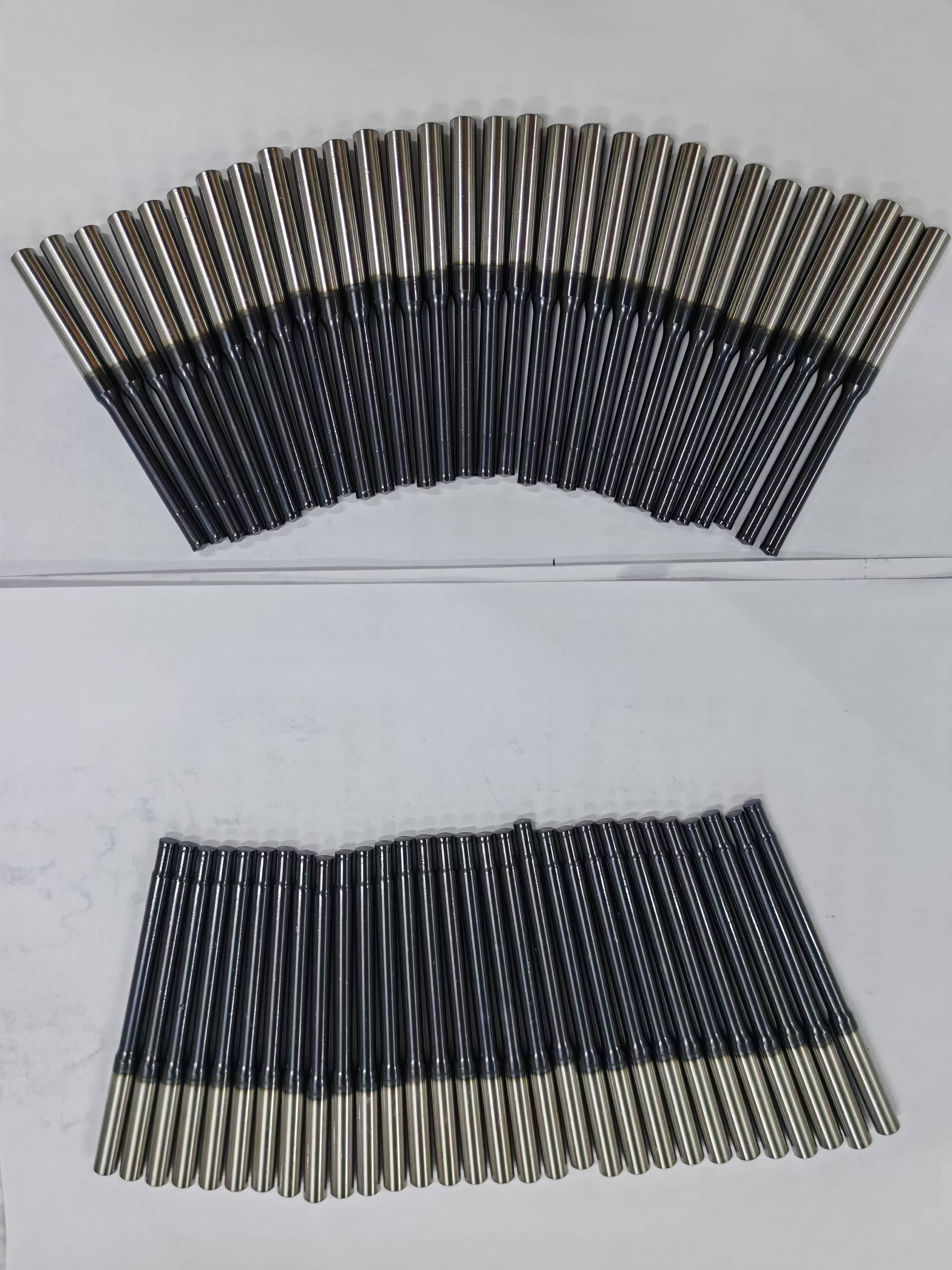
Subjective claims of "high precision" ruin manufacturing projects. Top-tier suppliers prove their capabilities through hard machining data. When you audit a toolmaker, you must demand specific engineering thresholds. These numbers separate basic machine shops from true micro-molding partners.
Cylindrical & Surface Grinding Standards: Centerless grinding represents the baseline. Top suppliers achieve roundness down to 0.001mm. They hold concentricity up to 0.0005 T.R.I. (Total Indicator Reading). This guarantees the pin rotates perfectly on its axis during machining.
Wire EDM Capabilities: Traditional milling cannot cut micro-features accurately. You must highlight ultra-precision Wire EDM processing. Look for equipment capable of achieving ±2μm accuracy. The surface finish must hit Ra0.05. This ultra-smooth finish allows plastic parts to slide off the pin flawlessly.
Integrated Ejection Tolerances: A mold only performs as well as its ejection phase. You must evaluate the alignment of the Punch Pin Ejector Pin within the mold base. It requires a micron-level clearance fit. Too tight, and the pin binds under thermal expansion. Too loose, and molten plastic flashes into the gap. Exact tolerances guarantee smooth ejection without galling.
Molding customized components often pushes standard machining equipment past its absolute limits. Engineers constantly fight against the natural physics of raw materials. Compensating for material behavior separates expert toolmakers from novices. Certain metal alloys exhibit a strong "spring back" effect. When a machine bends the metal, it naturally tries to return to its resting state. Engineers must calculate this exact physical response. They tool the mold using highly controlled over-bending. This forces the metal to settle exactly at the desired final angle.
Deep cavity cooling presents another significant challenge. Core pins absorb massive amounts of heat from molten plastic. Heat degrades plastic rapidly. You must remove this heat through internal cooling channels. However, drilling a deep hole inside a thin pin risks shattering the structural core. Toolmakers apply nano-drilling and specialized gun drilling techniques. These methods create incredibly deep, narrow water lines. They preserve the thick outer wall of the pin to maintain structural integrity.
Complex geometries require innovative off-axis machining strategies. Standard three-axis CNC machines struggle to cut right-angle pins or undercuts. Custom components often incorporate intricate threads. These threaded designs are common in specialized Fastener Molds. You need five-axis machining and custom holding fixtures to achieve off-axis precision. Fastener pins must resist high rotational shear forces during unscrewing ejections. They demand specialized hardening treatments to survive the torque.
Buyers must stop relying on post-production calipers to determine quality. Quality gets built into the design, not inspected into the final part. You must demand early Design for Manufacturability (DFM) intervention. Engineers should review your CAD models to identify weak pin structures before cutting any steel. Furthermore, Statistical Process Control (SPC) integration is mandatory. SPC tracks process variables over time. It predicts dimensional drift before it produces bad parts.
Look for documented, non-negotiable quality control pipelines. A genuine closed-loop system leaves no room for operator error. If a supplier cannot document these five exact steps, you should find another partner.
The 5-Step Quality Control Pipeline | ||
Step | Phase | Action & Purpose |
|---|---|---|
Step 1 | IQC (Incoming Materials) | Spectrometer testing of raw steel bars. Verifies exact metallurgical composition and hardness before machining begins. |
Step 2 | IPQC (In-Process QC) | Operators check tolerances immediately after grinding and EDM stages. Prevents passing defective parts to the next machine. |
Step 3 | First Piece Inspection | Thorough CMM scan of the first completed pin. Baselines the entire production run against the CAD model. |
Step 4 | Mass Production Tracking | SPC software monitors critical dimensions continuously. Alerts technicians to micro-wear on the cutting tools. |
Step 5 | FQC (Final Inspection) | Pre-shipment verification. Ensures correct coating thickness, surface roughness, and safe packaging for transit. |
We must address the transition from manual measurement to advanced metrology. Calipers rely entirely on the subjective physical pressure applied by an inspector. They are useless at the micron level. Transitioning to Coordinate Measuring Machine (CMM) verification provides objective data. CMM utilizes laser or highly sensitive touch probes. It plots thousands of data points across the pin's surface. CMM reporting stands as the only acceptable proof of strict tolerance adherence.
Sourcing precision mold components remains fundamentally an exercise in strict risk mitigation. The best manufacturing suppliers prioritize absolute process control over merely producing a single passable prototype. When engineers focus solely on the first-article inspection, they often miss the subtle variables causing late-stage production failures. True reliability demands verifying machine precision, material science knowledge, and rigorous compliance pipelines.
Engineers and procurement teams must take immediate action to audit potential partners. You should request an updated equipment list to verify grinding and EDM tolerances. Demand to see redacted examples of their closed-loop quality control documentation. Finally, review their historical PPAP and ISO compliance certificates. Choosing a supplier who masters these technical thresholds guarantees long-term tooling success.
A: Medical-grade pin molds frequently require tolerances as tight as ±0.0001 inches (±2.5 microns). Surface roughness often must reach Ra0.05 to prevent particulate generation. Additionally, these components must strictly adhere to ISO 13485 standards, requiring fully documented material traceability and cleanroom-ready, grease-free surface treatments.
A: A standard core pin remains stationary to form the internal geometry of a plastic part. Conversely, an ejector pin mechanically pushes the finished plastic part out of the mold. Because ejector pins actuate millions of times, they require specialized anti-galling coatings and differing surface hardness to prevent binding inside the mold base.
A: "Spring back" refers to the natural material science phenomenon where certain metals try to return to their original resting state after being bent. Toolmakers must precisely calculate this physical memory. They design the mold to over-compensate during the forming phase, ensuring the final pin settles exactly into the required dimensional angle.
A: Fastener molds typically produce components with intricate undercuts and internal threads. Precision core pins in these molds experience extreme rotational shear forces as the mold unscrews the part for ejection. This demands highly engineered off-axis geometry and exceptional core rigidity to prevent pin deflection or snapping under high torque.