- All
- Product Name
- Product Keyword
- Product Model
- Product Summary
- Product Description
- Multi Field Search

Views: 0 Author: Site Editor Publish Time: 2026-05-19 Origin: Site


Producing high-quality industrial fasteners relies entirely on tooling precision. The reliability of every threaded joint starts inside the cold forming cavity. Fastener manufacturers face shrinking margins daily. They also navigate demanding automotive standards and confront the physical limits of tool wear. Poorly engineered cavities lead to concentricity failures. They cause severe galling and trigger excessive machine downtime. Substandard tooling severely disrupts production lines and harms profitability. You need robust solutions to stay competitive in a high-volume market.
This article provides a strict evaluation framework for your operations. We explore how to design, select, and source Nut Molds effectively. You will understand how to stabilize high-volume output. We also guide you through meeting rigorous global engineering standards. Proper tool selection protects your profit margins. Evaluating your tooling options correctly ensures long-term operational success.
Tooling dictates profitability: The design of cold heading dies directly impacts overall equipment effectiveness (OEE) by reducing changeover frequency and scrap rates.
Geometry drives mold design: Flange nuts require distinct material flow management compared to standard hex nuts due to the rapid upsetting of the integrated washer footprint.
Automotive compliance starts at the die: Manufacturing automotive fasteners demands specialized carbide grades to handle high-tensile alloys and maintain tight tolerances for anti-vibration features.
Total Cost of Ownership (TCO): Evaluating nut molds must go beyond unit cost, focusing on millions-of-cycles durability and supplier QA protocols.
Precision tooling determines the financial success of your manufacturing floor. Die life expectancy dictates the actual cost-per-part in high-volume fastener production. Cheap tooling wears out prematurely. This forces frequent machine stops and expensive changeovers. You lose valuable production time and consume excessive labor hours. Investing in premium Fastener Molds stabilizes your unit economics. Predictable tool life allows you to forecast costs accurately.
Dimensional drift presents a massive risk to your business. Tools wear down slightly during each cycle. This wear alters critical dimensions over time. Wrench sizes can easily fail across-flat tolerances if wear accelerates unexpectedly. Such drift cascades into rejected batches. It ruins material yields and compromises client trust. Strict mold precision stops dimensional drift early. This precision acts as an insurance policy against mass scrap events.
Production velocity relies heavily on thermal management. High-speed forming generates intense heat. Optimized cooling paths and precision venting within the mold prevent thermal fatigue. They stop surface cracking on the metal blanks. Superior venting allows your machines to run at higher strokes-per-minute. We see significant output gains when facilities upgrade their tool designs. You can maximize throughput without sacrificing component quality.
Predictable Tool Life: Reduces unplanned machine downtime and labor costs.
Tolerance Control: Eliminates rejected batches caused by dimensional drift.
Thermal Management: Enables higher strokes-per-minute safely.
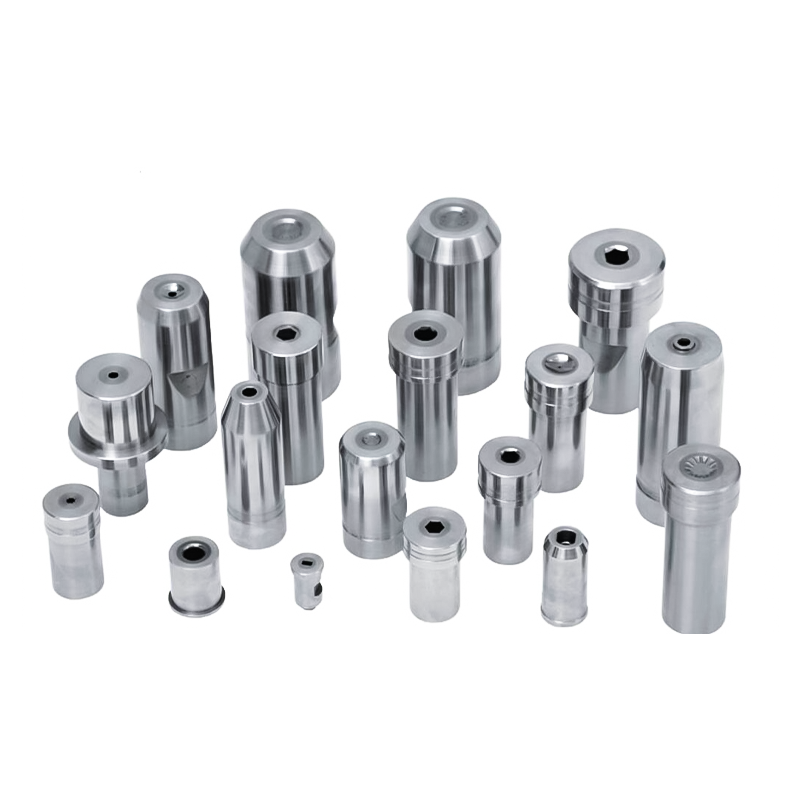
Different nut profiles require vastly different engineering approaches. You cannot apply a universal design to every fastener type. Geometry dictates material flow and stress distribution during the cold forming process.
Standard hex nuts demand rigorous dimensional stability. You must maintain precise across-flat (AF) measurements over millions of cycles. Thickness dimensions must strictly adhere to ISO 4032 or DIN 934 standards. Even minor deviations cause wrench slippage during final assembly. Maintaining these specifications requires highly engineered Cold Heading Dies.
Forming standard 6-point geometry creates intense internal stress mechanics. The material extrudes outward to fill the hex corners. This radial expansion puts immense pressure on the die walls. You need robust tungsten carbide inserts to handle this repetitive force. A weak insert will crack under the radial load. Proper insert geometry ensures even stress distribution across the tool face.
Flange nuts introduce extreme material flow complexity. Cold-forming the large bottom flange footprint forces material outward rapidly. This creates an aggressive deformation ratio. Superior material flow control is mandatory here. Poor flow control causes localized stress fractures in the die cavity. You must design transition zones carefully to guide the metal smoothly.
Forging anti-loosening serrations directly into the flange adds another challenge. These micro-features wear out faster than the main cavity walls. Tooling precision must be perfect. You must engineer the serration profile to withstand high-pressure abrasive wear. Improper serration angles will shear off during the forging stroke.
Profile Type | Flow Complexity | Key Stress Area | Primary Tooling Risk |
|---|---|---|---|
Standard Hex | Moderate | Hexagonal corners | Insert shattering |
Flange Nut | High | Flange transition radius | Serration wear |
Nylon Insert | Moderate-High | Top collar retention zone | Dimensional drift |
Automotive fastener manufacturing operates under severe scrutiny. The tools must handle advanced materials routinely. Modern chassis and powertrain assemblies require medium-carbon steels and high-strength alloys. Lightweight materials like aluminum and titanium are also common. Forming these alloys demands immense tonnage. You must select specialized carbide grades to survive this continuous punishment.
Automotive environments subject joints to extreme vibration. Fasteners require complex mechanical locking features to survive. Your die designs must adapt accordingly. Prevailing torque nuts require distinct top-thread deformation zones. Nylon-insert configurations need precise collar crimping geometries. Forming these intricate locking mechanisms requires multi-station dies. The tools must strike a perfect balance between material flow and dimensional accuracy.
Strict quality and traceability are non-negotiable. Your mold consistency directly supports PPAP (Production Part Approval Process) requirements. Buyers demand zero-defect batches. Every fastener must pass automated high-speed visual sorting. Optical comparators reject parts for microscopic surface flaws. High-quality molds ensure smooth surface finishes and perfect concentricity. This keeps your rejection rate near zero.
Best Practice: Always use flow simulation software before cutting automotive molds.
Best Practice: Implement rigid maintenance schedules to check for micro-cracks in the carbide.
Common Mistake: Using standard carbide grades for high-tensile automotive alloys will lead to rapid tool failure.
Selecting the right core material prevents catastrophic tool failure. Tungsten carbide remains the industry standard for inserts. However, you must carefully vary the binder percentages (typically cobalt). Higher binder content increases toughness but reduces wear resistance. Lower binder content maximizes hardness but increases brittleness. You must match the carbide grade to the hardness of the wire rod. High-speed tool steels work well for certain punches, but carbide dominates the high-volume die cavity.
The steel casing holds the entire assembly together. This casing provides critical compressive pre-load to the carbide insert. Carbide handles compression well but fails quickly under tension. A shrink-fit or press-fit steel case tightly grips the insert. This prevents the carbide from shattering under extreme tonnage. Proper interference fit calculations are essential during the design phase.
Advanced coatings extend tool life significantly. Physical Vapor Deposition (PVD) and Chemical Vapor Deposition (CVD) deliver immense value. Titanium Nitride (TiN) coatings reduce friction drastically. They prevent galling, also known as cold welding, where base metal sticks to the tool. A slick coating allows material to flow easier. This reduces the required tonnage and lowers tool temperatures.
Coating Type | Application Method | Primary Benefit | Best Use Case |
|---|---|---|---|
TiN (Titanium Nitride) | PVD | Excellent lubricity, reduces galling | Standard carbon steel wire |
TiAlN (Titanium Aluminum Nitride) | PVD | High thermal stability | High-speed forming environments |
TiC (Titanium Carbide) | CVD | Extreme hardness and wear resistance | High-tensile alloy steels |
Choosing the right tooling partner is a strategic decision. You must evaluate their engineering capability first. Look for suppliers offering finite element analysis (FEA). Flow simulation models the metal behavior before physical tooling is cut. This minimizes trial-and-error during the first article inspection. It saves weeks of development time.
Machining tolerances separate premium suppliers from average ones. Verify their internal grinding and EDM (Electrical Discharge Machining) capabilities. Tooling requires tolerances significantly tighter than the final fastener specifications. If the supplier lacks high-end EDM equipment, the mold surface finish will suffer. A poor finish guarantees premature galling.
High-volume production demands excellent scalability. Highlight the value of vendor-managed inventory (VMI). Custom kitting for consumable parts ensures uninterrupted runs. You cannot afford machine downtime because a specific punch is out of stock. A strong partner monitors your consumption and restocks proactively.
Compliance alignment rounds out the evaluation. Ensure the provider understands global standards deeply. North American markets rely on ANSI/ASME specifications. Metric markets strictly enforce DIN/ISO requirements. Your tooling partner must translate these fastener standards into exact cavity dimensions. They must account for plating thickness and heat treatment shrinkage.
Investing in premium tools is a vital operational strategy. High-quality cavities lock in production consistency across millions of cycles. They protect your profit margins in a highly competitive, commodity-driven market. Substandard equipment only guarantees rejected batches and machine downtime. You must prioritize precision engineering and advanced surface treatments to stay ahead.
Begin your improvement process today. We recommend starting with a strict tooling audit. Identify the most frequently replaced dies on your production floor right now. Document their exact failure modes and cycle counts. Use these metrics as your baseline performance data. Share this data when evaluating new supply partners to demand measurable improvements.
A: Cycle ranges depend entirely on the carbide grade and wire rod hardness. A premium die forming low-carbon steel can easily exceed several million cycles. However, forming high-tensile alloy steels significantly reduces die life. You might only achieve 500,000 cycles before requiring replacement. Regular maintenance extends these ranges.
A: The larger deformation ratio required to form the flange creates substantially higher radial stress. Material must flow outward aggressively to form the footprint. This necessity demands reinforced die cases and optimized carbide selection. Without proper reinforcement, the cavity will fracture prematurely under the immense forging pressure.
A: No. High-stress applications require highly specialized geometries and much tighter tolerances. Standard tooling cannot handle the tonnage needed to form aerospace-grade alloys like titanium. Using standard equipment for these materials results in immediate tool shattering and unacceptable dimensional drift. Specialized applications demand specialized tool engineering.
A: Surface treatments drastically lower the coefficient of friction inside the cavity. They act as a critical thermal barrier during high-speed extrusion processes. This prevents the base material from cold-welding to the tool surface. Coatings like TiN keep the tools cooler and reduce overall wear significantly.