- All
- Product Name
- Product Keyword
- Product Model
- Product Summary
- Product Description
- Multi Field Search

Views: 0 Author: Site Editor Publish Time: 2026-05-14 Origin: Site


Moving from fastener prototyping to high-volume production requires bridging the gap between product design and manufacturing reality. Producing screws profitably hinges entirely on the durability and precision of the tooling. Standardized tooling fails when applied to complex fastener geometries. Selecting the correct Screw Molds—specifically cold heading dies and thread rolling dies—requires matching metallurgical properties and cavity geometry to the specific mechanical demands of the target screw. For example, you must account for distinct forces between machine and self-tapping screws, or thread-cutting versus thread-forming designs.
This guide provides manufacturing engineers and procurement teams an objective framework. You will learn to evaluate, shortlist, and specify fastener molds effectively. We aim to help you optimize tool life and ensure consistent batch quality across all your production runs.
The choice between tungsten carbide and High-Speed Steel (HSS) for cold heading dies must align with the target screw's material hardness (e.g., carbon steel vs. 304 stainless).
Self-tapping and self-drilling screws require specialized multi-stage tooling (header dies, pointing dies, thread rollers) compared to standard machine screws.
Advanced fastener features, such as Type A/AB points or trilobular thread-forming geometries, demand tighter mold tolerances to prevent end-user installation failures like flute chipping or improper strip-to-drive ratios.
Evaluating a tooling vendor requires looking beyond initial cost to assess projected tool life (strokes per die), coating technologies, and tolerance consistency.
Fastener type heavily influences the required tooling geometry and material resilience. Standard machine screws generally require straightforward heading and rolling processes. In contrast, self-tapping and self-drilling fasteners demand highly specialized setups. You must form specialized elements like cutting flutes, drill points, and aggressive thread pitches. These aggressive profiles place immense lateral and compressive stress on your dies.
Producing thread-forming screws demands different thread rolling die geometries than thread-cutting screws. Thread-forming fasteners displace material to create threads. They often feature trilobular or Hi-Lo designs. The mold must accommodate smooth material extrusion. Thread-cutting screws require sharp, interrupted threads to remove material effectively. If you use improper rolling dies for cutting screws, you risk dulling the thread crests prematurely. This directly impacts how easily the end-user drives the fastener into hard substrates.
Point geometry considerations also dictate the requirements for your pinch pointing dies. The sequence relies heavily on exactly what self-tapping tip you intend to produce. Producing specific points changes your tooling strategy:
Type A Points: Designed for thin metals. They require highly acute pinch pointing cavities.
Type AB Points: Designed for thicker gauges. They combine finer pitches and sharp tips.
Type B Points: Designed for blind holes. They feature a blunt tip requiring different die contouring.
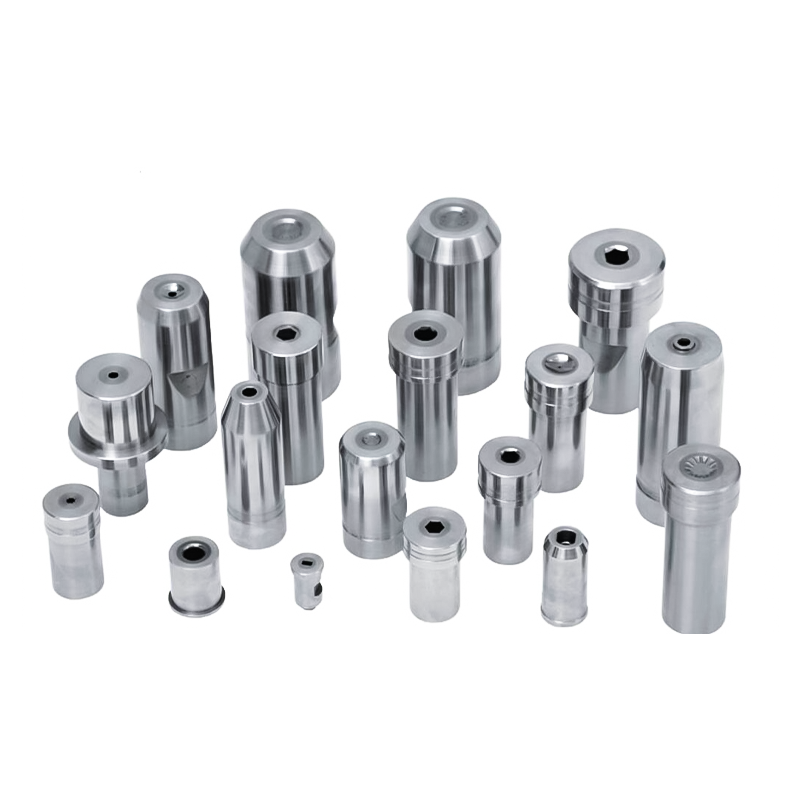
To establish a reliable production line, engineers must understand the distinct stages of wire deformation. The foundational components of Fastener Molds break down into several core categories. Each stage handles specific shaping tasks.
First Punch Sequence: The machine cuts the wire blank and feeds it into the die. The initial punch upsets the material, gathering volume for the head.
Second Punch Sequence: The finishing punch strikes the upset material. It forms the final head style and creates the drive recess.
Pinch Pointing Phase: Used mainly for self-drilling variants. Specialized dies pinch the blank tip to forge cutting edges.
Thread Rolling Phase: The headed blank rolls between two grooved steel plates or cylindrical dies to impress the thread pattern.
The foundational molds forming the wire blank into the screw's head and shank are Cold Heading Dies. Head styles dictate the complexity of the punch and die cavities. A flat countersunk head requires different material flow dynamics than a pan-head, truss, or flange-head. Complex geometries like flange-heads demand perfectly tuned cavities to prevent material overlapping or sheer stress lines.
Pinch pointing dies or drill-point dies serve as specialized tooling utilized prior to thread rolling. They forge the cutting edges or drill tips on self-drilling fasteners. If these dies drift out of tolerance, the resulting screw will fail to pierce target materials.
Thread rolling dies are responsible for impressing the thread pattern onto the blank. You can utilize either flat plates or cylindrical planetary rollers. The die's pitch, angle, and surface hardness dictate the final thread quality. Furthermore, precision here determines the fastener's ultimate strip-to-drive performance. An optimal strip-to-drive ratio ensures automated assembly tools stop driving before stripping the newly formed threads.
Choosing the correct metallurgical makeup for your dies determines your production uptime. Manufacturers typically choose between Tungsten Carbide and High-Speed Steel (HSS). Each material brings distinct operational characteristics.
Material Type | Key Characteristics | Ideal Fastener Applications | Limitations |
|---|---|---|---|
Tungsten Carbide | Exceptionally high wear resistance, immense compressive strength. | High-volume runs of standard carbon steel or softer aluminum alloys. | High upfront cost, brittle under heavy impact, prone to chipping. |
High-Speed Steel (HSS) | Higher toughness, superior resistance to shock and sudden cracking. | Work-hardening materials like 300-series stainless steel. | Lower wear resistance, requires more frequent replacement. |
Carbide provides an exceptionally high wear resistance. We consider it best for high-volume runs processing standard carbon steel. However, its brittle nature poses risks. HSS offers much higher toughness. It provides better resistance to shock and cracking. Engineers often prefer HSS for heading difficult, work-hardening materials like 300-series stainless steel. Carbide might easily chip under the severe impact required to forge stainless steel heads.
Evaluating surface treatments and PVD coatings also matters. Coatings like TiN (Titanium Nitride), TiCN (Titanium Carbonitride), or proprietary surface treatments mitigate galling. They effectively reduce friction during material extrusion. A well-coated die allows the wire blank to flow seamlessly into complex cavity corners. This extends the lifespan of the cold heading dies significantly.
Balancing tooling material costs against your expected production volume determines your true ROI. You must calculate the cost-per-thousand-pieces. Expensive carbide inserts make financial sense for millions of carbon steel strokes. Short-run custom stainless fasteners benefit from cheaper, shock-resistant HSS tooling. Align your material choices strictly to your batch volume expectations.
Custom fasteners push manufacturing boundaries. They often integrate specific anti-vibration features, proprietary security recesses, or under-head locking serrations. Standard catalog dies cannot produce these geometries. They require custom EDM (Electrical Discharge Machining) profiling.
Complex profiles demand rigorous attention to detail. Common advanced features include:
Under-head serrations: Used to bite into the mating material and prevent loosening.
Trilobular shanks: Used in thread-forming applications to lower radial stress on plastic housings.
Hi-Lo threads: Dual-thread heights designed to prevent pull-out in low-density materials.
Security drives: Tamper-proof recesses requiring pinpoint punch precision.
Managing dimensional stability separates high-quality molds from inferior ones. Tight tolerance in the mold proves critical for the end-user. If a mold allows drift in the screw's major or minor diameter, it directly degrades the fastener's strip-to-drive ratio. A degraded ratio becomes a critical failure point in automated assembly lines. Assembly robots apply constant torque. If fastener dimensions vary, robots will snap the screw or strip the substrate.
Transitioning from prototyping to production requires care. You face the necessity of running soft-tooling or pilot runs first. Soft-tooling allows engineers to verify material flow and head formation dynamically. Do this before investing heavily in hard carbide production molds. Discovering a flow defect after machining a carbide die wastes immense capital and halts production timelines.
Tooling failures derail production schedules and inflate manufacturing costs. Recognizing these failure modes early prevents large-scale scrap events.
Premature die wear and galling serve as the most frequent pain points. Galling occurs when pressure and friction micro-weld the wire blank material to the die cavity. This is often caused by a mismatch between the die material and the wire blank. Insufficient lubrication during the cold heading process also accelerates galling. You must use specialized extrusion oils designed for high-pressure forming to keep die surfaces protected.
Poor mold quality translates rapidly to downstream fastener failures. Consider what happens when your pinch pointing dies wear down. Worn pointing dies lead to blunt self-drilling screws. End-users will experience screws melting or splitting the target material during installation due to excessive friction. Misaligned thread rollers cause cross-threading or jammed flutes. Your customers will reject entire batches if they encounter deformed drill points.
To avoid these pitfalls, upgrade your vendor evaluation criteria. Stop shortlisting tooling suppliers based solely on piece-price. Instead, evaluate their capability to provide metallurgical certifications. Demand run-life guarantees based on similar tooling projects. Ask for dimensional inspection reports. Reputable mold makers provide optical comparator data or 3D scan reports for their dies before shipment. This data proves their tooling precisely matches your CAD models.
Choosing the right screw molds requires cross-referencing the fastener's mechanical requirements (material, head style, thread type) with the tooling's metallurgical limits. Standardized tooling cannot reliably produce custom geometries or self-tapping profiles. You must align die materials, surface coatings, and cavity precision to your production goals.
Take proactive next-step actions as you move to the procurement phase. Request comprehensive tool life data from your vendors based on past performance. Always provide exact screw drawings and 3D CAD files to eliminate ambiguity. Finally, clarify required tolerances by referencing specific ISO or ASTM standards directly within your Request for Quote (RFQ). This ensures your tooling partner understands the exact quality threshold required.
A: Variables include die material, screw material, and production speeds. Typical ranges span from hundreds of thousands to millions of strokes. Carbide dies heading soft carbon steel can exceed millions of strokes. HSS dies heading hard stainless steel usually require replacement much sooner.
A: No. The pitch, thread depth, and forming mechanics differ fundamentally. Machine screws utilize standardized uniform threads. Self-tapping screws feature spaced, aggressive threads designed to cut or deform material. Using the wrong die ruins the thread profile.
A: This depends heavily on your existing machine infrastructure, required production speed, and part diameter. Flat dies suit traditional high-speed mechanical rollers common in mass production. Cylindrical dies offer excellent precision for harder materials and larger custom diameters.
A: Cracking usually occurs due to improper material selection for the application. Using brittle carbide for high-impact heading of hard stainless steel causes shattering. Poor wire blank preparation or misalignment in the machine also causes uneven stress. Prevent this by matching tool toughness to wire hardness.