- All
- Product Name
- Product Keyword
- Product Model
- Product Summary
- Product Description
- Multi Field Search

Views: 0 Author: Site Editor Publish Time: 2026-01-08 Origin: Site


Did you know thatcold forming dies can boost both efficiency and precision in manufacturing? These tools shape metals at room temperature, preserving their strength while reducing waste and energy costs.
In this article, we will explore how high-precision cold forming dies improve production efficiency and consistency. You’ll learn about their design, material choices, and technological advancements that reduce downtime and enhance productivity.
In cold forming, die precision directly impacts part accuracy and the manufacturing process’s overall quality. Tight tolerances ensure that every component produced meets strict dimensional requirements, which is essential in high-performance sectors like automotive, aerospace, and medical device manufacturing.
Precision in die design ensures that parts are manufactured with minimal deviation from the desired specifications. Without precise tolerance control, the risk of defective parts increases, leading to costly rework, downtime, and scrap. Cold forming dies play a vital role in ensuring that parts maintain the right shape, size, and surface finish throughout production.
High-precision dies reduce defects such as dimensional drift, surface imperfections, and inconsistencies in material properties. This leads to higher product reliability and fewer failures in the final application, which is crucial in industries where safety and performance are paramount.Examples of Tolerance Deviations Affecting Production Quality
In automotive manufacturing, even slight variations in part dimensions can result in assembly difficulties or functional failures. In aerospace, inaccuracies can lead to safety risks. By using high-precision cold forming dies, manufacturers can significantly reduce these risks.
The design of high-precision cold forming dies relies on advanced engineering techniques, including CNC machining, EDM (Electrical Discharge Machining), and metrology. These methods allow for incredibly tight tolerances and the creation of complex die geometries that would otherwise be impossible with traditional die-making processes.
CNC machines provide high-precision cutting, ensuring that dies are made to exact specifications. EDM is used for fine detailing, while metrology tools like laser scanning and coordinate measuring machines (CMM) guarantee that dies meet the strictest quality standards.
Regular calibration of equipment and continuous measurement during die production ensures that each tool maintains its precision throughout its life cycle. This consistency in fabrication translates into fewer production issues, lower reject rates, and higher customer satisfaction.
High-precision tooling leads to faster production cycles. As parts are consistently shaped to precise specifications, the need for secondary operations (like rework or additional machining) is minimized, which directly improves throughput and reduces lead time. The ability to produce large quantities of parts with minimal adjustment is a significant advantage for high-volume manufacturers.
The way metal flows through a cold forming die is crucial for minimizing friction, reducing tool wear, and optimizing production efficiency. Controlled metal flow ensures that the material fills the die cavity evenly, leading to consistent part formation without defects.
High-precision cold forming dies use carefully designed cavities and channels that guide material through the die in an optimal manner. By minimizing friction between the metal and the die surface, these designs reduce tool wear and extend die life, contributing to lower maintenance costs and fewer production interruptions.
By ensuring that material flows smoothly and evenly, cold forming dies reduce the likelihood of defects and rework. This leads to lower energy consumption as the process becomes more efficient, and fewer parts need to be scrapped or reprocessed, saving both material and energy costs.
High-speed operation is one of the main advantages of using cold forming dies in high-volume manufacturing. Multi-stage dies and automation integration are key to achieving faster cycle times while maintaining part quality.
Multi-stage dies allow for several forming operations to take place in one cycle. This approach reduces the need for additional machinery and setup time, thus increasing overall efficiency. Automated systems, such as robotic arms and feeder systems, further optimize the process by reducing manual labor and streamlining part handling.
Simulation software plays a vital role in die design by predicting the flow of material and the stresses it will undergo during the forming process. This enables engineers to optimize die designs before manufacturing, ensuring that the die performs efficiently in high-speed operations.
Lubrication and surface treatments are essential for reducing friction, enhancing die life, and improving part finish. The right coatings can extend die life and improve the overall efficiency of the cold forming process.
Die Type | Efficiency Improvement | Key Features | Best Use Case |
Multi-Stage Dies | High throughput, minimal rework | Multiple forming stages in one cycle | High-volume production |
Titanium Nitride (TiN) Coating | Extended die life, reduced friction | Hard and smooth coating | Automotive fasteners, aerospace |
Chromium Nitride (CrN) Coating | Enhanced wear resistance | Protects against abrasive wear | High-precision components |
Diamond-Like Carbon (DLC) Coating | Long die life, reduced maintenance | Extremely hard and smooth surface | Electronics and medical parts |
Coatings also protect the die from thermal and abrasive wear, extending its lifespan and reducing the frequency of tool replacements. This reduces downtime and maintenance costs, improving overall production efficiency.
The selection of tool steel and other materials for cold forming dies is critical to the die's performance. High-quality materials withstand the stress of forming operations and maintain their shape and functionality over extended periods.
Tool steels like D2, H13, and M2 are commonly used in high-precision cold forming dies. Carbide inserts further enhance the die's resistance to wear and heat, ensuring high performance even under extreme pressures.
The choice of material depends on the pressure the die will face. For high-pressure applications, tougher materials like H13 or carbide inserts are required. These materials resist deformation, ensuring consistent part quality and extended die life.
Real-time monitoring allows manufacturers to track die performance and anticipate failures before they occur, reducing downtime and improving overall process efficiency.
Sensors integrated into cold forming dies measure force, pressure, and temperature, providing valuable data about the forming process. This allows manufacturers to adjust parameters in real time to optimize die performance and ensure consistent part quality.
Data collected by sensors can be used to predict when a die will need maintenance or replacement. By proactively managing die wear, manufacturers can avoid unplanned downtime and extend the life of their tooling.
The savings in energy, scrap, and time per production cycle can be quantified through real-time monitoring. Manufacturers can calculate improvements in cycle time, reduced energy use, and lower scrap rates, which directly contribute to enhanced productivity and cost efficiency.
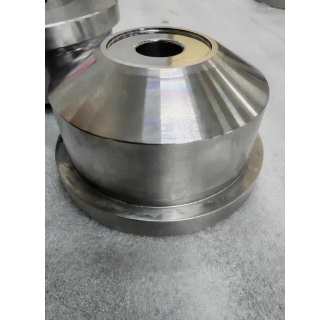
The high precision of cold forming dies ensures that parts are produced with uniform dimensions, reducing the likelihood of defects and minimizing rework.
Consistent die design and precise fabrication guarantee that parts are produced to the same specifications, batch after batch. This repeatability is essential in industries such as automotive and aerospace, where even small deviations can lead to costly defects.
3D scanning and Coordinate Measuring Machines (CMM) are used to verify the dimensional accuracy of parts. These technologies ensure that parts produced by cold forming dies meet the strictest quality standards.
Cold forming not only improves the mechanical properties of metal but also enhances surface finish and grain structure, which are critical in high-performance applications.
Effects of Cold Forming on Microstructure and Fatigue Resistance
The strain-hardening effect in cold forming increases the strength and fatigue resistance of parts, making them ideal for demanding applications. This improvement in material properties reduces the risk of failure under stress.
Die Polish and Surface Quality Correlation
The smoothness of the die surface directly influences the finish of the formed part. Polished dies create smoother parts with fewer surface defects, improving both aesthetic quality and functionality.
SPC tools are used to monitor and control the forming process, ensuring that production remains stable and within specified limits.
Data Tracking for Variation Analysis
By tracking key production metrics, such as temperature, pressure, and cycle time, SPC tools help identify potential sources of variation. Early detection allows for adjustments to be made before defects occur, ensuring consistent quality.
Maintaining Process Stability Across Production Shifts
With SPC, manufacturers can maintain process stability across multiple shifts, ensuring that quality is consistent no matter the production volume.
High-precision cold forming dies give manufacturers a competitive edge by ensuring parts are consistently produced with high strength and minimal defects. This reliability is especially critical in industries where safety and performance are non-negotiable.
High-precision cold forming dies are engineered with advanced technologies such as CNC machining and EDM, which ensure tighter tolerances and better performance compared to conventional dies.
CNC machines provide much higher accuracy than manual grinding, reducing errors in the die’s shape and improving part consistency. This precision is vital for parts that require tight tolerances.
Using materials like H13, M2, and carbide inserts ensures that high-precision dies can withstand the high stresses of cold forming while maintaining accuracy throughout the production run.
High-precision dies lead to better throughput, fewer defects, and lower rejection rates. Their ability to handle high-pressure, high-speed operations improves overall production efficiency.
High-precision dies provide faster cycle times, consistent quality, and a longer lifespan compared to conventional dies. As a result, they reduce the overall cost per unit over time.
Predictive maintenance helps reduce the need for reactive repairs, saving costs and reducing downtime.
Predictive Maintenance vs. Reactive Replacement
By using real-time data and performance monitoring, manufacturers can schedule maintenance before tools fail, avoiding costly unplanned downtimes.
Investing in high-precision cold forming dies results in higher production rates, reduced material waste, and better part consistency, offering significant long-term savings.
High-precision cold forming dies are crucial for modern manufacturing, enhancing efficiency, consistency, and part quality. These dies ensure dimensional accuracy, improved surface finishes, and extended tool life, which leads to higher productivity and reduced costs. By integrating advanced materials, precise die design, and real-time monitoring, manufacturers can optimize production. Kunshan Yuntai Precision Mold Co., Ltd. provides high-quality cold forming dies that offer superior value, boosting production efficiency and delivering long-term cost savings in high-volume operations.
A: A high-precision cold forming die shapes metal at room temperature using compressive force, ensuring tight tolerances and consistent part quality.
A: Cold forming dies optimize metal flow, reduce friction, and minimize tool wear, resulting in faster cycles and lower operational costs.
A: High-precision cold forming dies ensure uniform dimensions, surface finish, and reduced defects, improving part reliability across production runs.
A: Cold forming dies use materials like D2, H13, and M2 tool steels, providing high wear resistance and durability under pressure.
A: Die design affects material flow, tool wear, and energy consumption, making it crucial for optimizing cold forming die efficiency improvement.