- All
- Product Name
- Product Keyword
- Product Model
- Product Summary
- Product Description
- Multi Field Search

Views: 0 Author: Site Editor Publish Time: 2026-07-13 Origin: Site


Manual multi-part fastener assembly introduces tolerance stack-up, cycle time variability, and elevated scrap rates. Production lines rely heavily on human operators. This reliance inevitably causes bottlenecks. Workers face fatigue when handling tiny components. This fatigue leads directly to expensive errors.
Transitioning from manual placement and kitting to engineered solutions changes everything. It shifts quality control from operator skill to tooling precision. You no longer hope for consistent results. You engineer them. Precision molds eliminate the guesswork inherent in manual processes.
This guide outlines how to evaluate custom molding and tooling solutions. We cover complex die designs that stabilize assembly consistency. You will learn how to reduce secondary operations. Finally, we explain how you can justify tooling CapEx through verifiable production efficiency metrics. Upgrading your workflow delivers measurable, repeatable success.
Integrating fasteners directly via specialized molds reduces bill of material (BOM) complexity and secondary assembly steps.
Success depends on precise tolerance control; mitigating plastic flash and misalignment requires upfront Design for Manufacturability (DFM) validation.
Custom irregular dies design is critical for maintaining consistency when working with non-standard fastener geometries.
Evaluating a tooling partner requires looking beyond unit price to assess their capabilities in secondary operations, tool maintenance, and automated kitting integration.
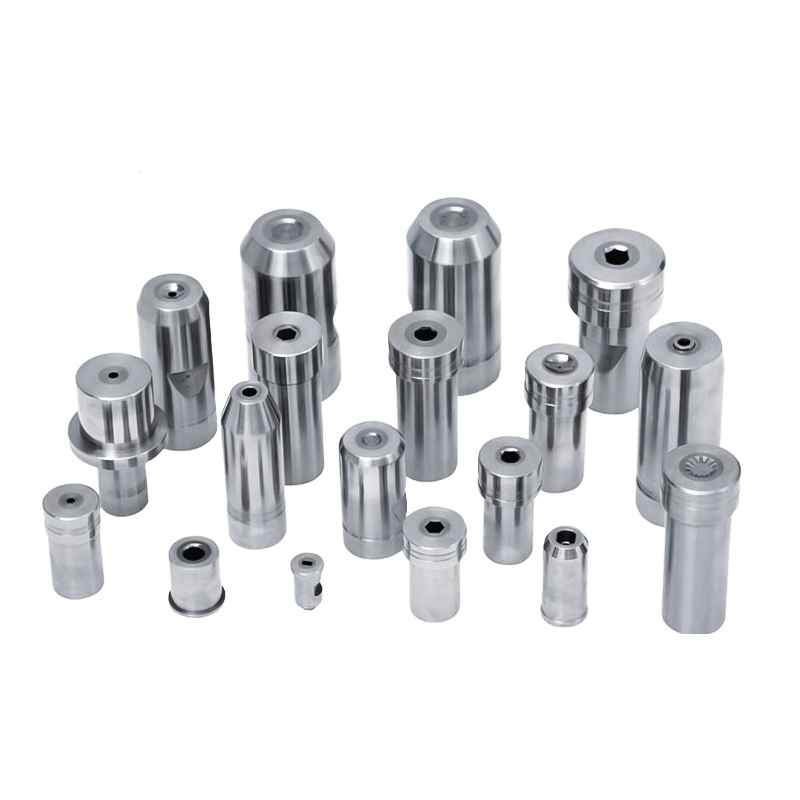
Manual insertion drives up labor costs. Complex fastening steps inflate defect rates rapidly. Assembly teams spend hours orienting small parts. This manual labor dominates your production budget. Every second spent handling a fastener adds zero inherent value. It only adds expense. Manufacturers often underestimate these hidden labor drains. They treat slow assembly as a standard industry reality. You must reject this assumption to improve margins. Upgrading to engineered solutions fundamentally lowers your per-part manufacturing expense.
Multi-part assemblies present numerous failure points. We see these errors across multiple industries. You must analyze these failures to improve output.
Cross-threading: Operators frequently misalign screws during rapid assembly. This ruins the threaded insert. It forces workers to scrap the entire molded part.
Stripped inserts: Handheld torque tools apply inconsistent force. Over-torquing strips the delicate brass or steel inserts. Under-torquing leaves the assembly dangerously loose.
Poor torque retention: Post-molding insertion often damages the surrounding plastic. The plastic then relaxes over time. The fastener loses its grip and fails in the field.
Misaligned components: Manual kitting leads to geometric shifts. Fasteners sit at slight angles. These tiny deviations prevent mating parts from joining correctly.
You need clear metrics before buying new equipment. Define what warrants the investment in dedicated Fastener Assembly Molds. Do not buy tools blindly. Establish rigid success criteria.
Volume thresholds: Determine your minimum viable production run. High-volume runs justify the upfront tooling costs quickly. Low volumes might require modular tooling approaches instead.
Scrap reduction targets: Set a strict percentage goal. If manual assembly scraps five percent of parts, aim for under one percent with automated molds.
Cycle-time compression: Measure your current per-part assembly time. Require your new tooling to slash this time by a specific margin. Faster cycles equal higher daily throughput.
Dimensional tolerances: Review your engineering drawings. Strict compliance with dimensional tolerances demands engineered molds. Manual insertion cannot hold microscopic tolerances reliably.
Insert molding fundamentally transforms part production. You place components into the mold cavity first. The machine then injects molten plastic around them. You embed threaded inserts, studs, or specialized fasteners directly during the injection molding cycle.
This process offers massive structural benefits. It fully encapsulates the fastener hardware. This eliminates downstream mechanical assembly entirely. You bypass the secondary insertion station. It also drastically improves pull-out and torque-out resistance. The plastic shrinks around the metal insert as it cools. This creates an incredibly strong mechanical bond. Post-molding pressing cannot replicate this strength.
Using specialized Fastener Molds requires excellent thermal control. The metal inserts change how the mold cools. Your tooling partner must design appropriate cooling channels. Poor cooling causes part warpage. Warpage leads to rejected components. Precision thermal management guarantees flat, accurate parts every time.
Sometimes you cannot mold fasteners directly into the part. You must use secondary automated assembly instead. This requires high-precision fixtures and jigs. High-quality fixtures remove operator variability. They lock the plastic component into an exact orientation.
Automated stations use robotic arms or pneumatic presses. These machines drive the fasteners home perfectly. They apply exactly the right torque. They never tire. They never rush. Fixtures must locate the part using specific datum points. This ensures the fasteners always hit the correct targets. Strong fixtures handle the mechanical stress of insertion. They prevent the plastic from cracking under pressure.
Common Mistakes in Fixture Design: Engineers often make fixtures too complex. Complex fixtures slow down the loading process. Keep the clamping mechanisms simple. Use quick-release toggles. Ensure operators can load the parts effortlessly.
Standard circular inserts are relatively easy to handle. However, modern products demand unique shapes. You might need to integrate rectangular studs. You may require offset mounting brackets. These non-standard geometries complicate the molding process significantly. Standard pins cannot hold these shapes in place securely.
You must address these complex orientations in the mold cavity. Custom Irregular Dies Design becomes absolutely critical here. These specialized dies match the exact contours of your unique fasteners. They grip the hardware tightly during the injection phase.
High injection pressures will dislodge poorly secured inserts. An irregular die prevents this catastrophic shifting. It cradles the asymmetric part. It maintains the precise dimensional orientation required. When you work with non-standard fastener geometries, basic tooling fails. Investing in custom die design guarantees your complex parts stay exactly where you put them.
Fastening Method Comparison Chart
Production Method | Labor Intensity | Consistency Level | Risk of Scrap |
|---|---|---|---|
Manual Hand Assembly | Very High | Low to Medium | High (Cross-threading) |
Semi-Automated Jig | Medium | High | Medium |
Direct Insert Molding | Very Low | Extremely High | Very Low |
Tolerance stack-up ruins complex assemblies. Each part has an acceptable size variance. When you combine five parts, these variances multiply. Suddenly, the final assembly does not fit together. DFM validation stops this early. You must simulate the assembly stack-up during the CAD phase. Tighten the tolerances on the critical mating surfaces. Relax tolerances on non-critical areas to save machining costs.
Flash occurs when molten plastic escapes the mold cavity. It creeps over the metal fastener threads. This renders the fastener completely useless. The next mating screw will not thread in. Mitigating plastic flash requires exceptional mold machining. The mold steel must pinch off tightly against the metal insert. If the insert varies in size, flash will happen. You must source high-quality, dimensionally stable metal inserts.
Inserts can float during the injection cycle. The rushing plastic pushes them off center. DFM validation must analyze the plastic flow paths. Gate placement is critical here. You should position the injection gates symmetrically around the insert. Symmetrical gates balance the plastic pressure. This keeps the fastener perfectly straight. Uneven pressure bends pins and misaligns components.
Many buyers focus strictly on the initial mold quote. This strategy fails frequently. A cheap mold often runs poorly. It requires constant maintenance. It produces high scrap rates. You must evaluate the tooling partner holistically. Look beyond the upfront unit price. Assess their engineering depth. Do they offer robust DFM feedback? A good partner challenges your design to improve it.
Assess their capabilities in secondary operations. Can they build the automated insertion jigs if insert molding is impossible? Can they handle the ultrasonic welding? Consolidating these steps with one partner reduces logistical headaches.
Tool maintenance capabilities are equally crucial. Injection molds wear down over time. Pins break. Gates degrade. Your partner must have an in-house tool room. They need to repair the mold quickly. Shipping the mold across the country for repairs halts your production line. On-site maintenance guarantees uptime.
Finally, evaluate their automated kitting integration. How do they package the final assembled components? Manual bagging introduces counting errors. Automated vision systems verify the exact part count. They ensure the customer receives perfect kits every time. Strong partners automate the entire backend process.
Improving multi-part fastener assembly demands a shift away from manual processes. You must embrace engineered tooling to guarantee consistency. Upgrading to insert molding eliminates downstream errors entirely. It dramatically strengthens the final product.
Next steps for your engineering team:
Audit your current assembly line to identify exact scrap rates caused by manual fastening.
Consult a tooling expert to run a DFM analysis on your most problematic multi-part assembly.
Evaluate the feasibility of transitioning your highest-volume parts directly to insert molding.
Implement custom dies for any non-standard fasteners causing current production delays.
Taking these actions will stabilize your output. You will reduce unnecessary labor costs. Most importantly, you will deliver a significantly higher quality product to your end users.
A: Tolerance stack-up happens when multiple parts join together. Each individual part has a slight acceptable size variation. When you stack these parts, the tiny variations add up. This combined variance can push the final assembly out of acceptable specifications. Using precision molds minimizes these individual variances.
A: Insert molding places a strong metal thread directly into the plastic part during production. The plastic cools and shrinks tightly around the metal. This bond is incredibly strong. It prevents the insert from spinning or stripping when you apply torque later.
A: Plastic flash happens when resin bleeds into the internal threads of a fastener. It hardens inside the grooves. This blocks the mating screw from entering. Removing this flash manually is tedious and expensive. Precision mold designs pinch the insert tightly to prevent this bleeding.
A: You need irregular die designs when handling non-standard fasteners. Standard round pins cannot secure asymmetric or offset brackets during injection molding. Custom dies mirror the exact shape of your unique hardware. This prevents the hardware from shifting under high injection pressures.
A: The biggest mistake is buying based solely on the lowest initial mold price. Cheap molds often lack proper cooling channels or precision pinch-offs. They break down frequently. You should evaluate partners based on their DFM expertise, in-house maintenance capabilities, and track record with complex assemblies.