- All
- Product Name
- Product Keyword
- Product Model
- Product Summary
- Product Description
- Multi Field Search

Views: 0 Author: Site Editor Publish Time: 2026-07-16 Origin: Site


High-volume fastener manufacturing relies heavily on minimizing machine downtime. Every paused production line bleeds revenue and increases the cost-per-part. You face a major problem when using uncoated or improperly coated tooling. These critical components suffer from rapid galling, severe abrasive wear, and premature fatigue under extreme pressure. Such failures degrade part quality and drastically reduce factory profitability.
This guide serves as a precise technical evaluation tool for your operations. We designed it to help tooling engineers and procurement managers make better metallurgical choices. You will learn how to match the correct PVD (Physical Vapor Deposition) coating to specific workpiece materials and strict production demands. We explore various coating properties, from microhardness to coefficient of friction. Read on to discover how optimal coating selection transforms your manufacturing yield and protects your tooling investments.
TiN remains the reliable, cost-effective baseline for general-purpose carbon steel heading.
TiCN offers superior hardness and lower friction, making it the standard for abrasive materials and stainless steel.
CrN provides exceptional anti-galling properties, critical for forming copper, titanium, and non-ferrous alloys.
TiAlN and AlCrN represent the premium tier for extreme high-heat, high-stress applications, essential for maximizing the output of imported high-speed cold heading dies.
Proper substrate preparation (polishing and heat treatment) is non-negotiable; a premium coating will fail on a sub-standard die surface.
Selecting the right protective layer directly impacts your factory floor operations. Premature tooling failure forces maintenance teams into a reactive mode. This disrupts schedules and frustrates operators. We must look beyond the initial purchase price of the tools. You need to analyze the hidden expenses surrounding operational interruptions.
Consider the battle between machine downtime and uptime. When a die fails early due to galling, production stops completely. Operators must perform unplanned machine changeovers. These changeovers consume valuable labor hours. Micro-chipping events also ruin the surface finish of your fasteners. You then scrap entire batches of defective parts. Frequent interruptions destroy your daily output metrics. Cold Heading Dies require optimal surface protection to keep machines running continuously.
Yield consistency is another vital business metric. High-volume runs demand incredibly tight dimensional tolerances. Coatings maintain stability inside the die cavity over millions of strikes. They prevent the internal geometry from wearing down prematurely. A stable cavity ensures every fastener meets exact specifications. You maintain perfect product consistency from the first strike to the last. This reliability builds strong trust among your end customers.
Engineers evaluate coatings based on precise metallurgical properties. You cannot guess which layer works best. We rely on four primary technical dimensions to determine suitability. Understanding these metrics helps you optimize your Cold Working Molds for peak performance.
Microhardness (HV): This value defines the ability to resist abrasive wear. High microhardness protects the tool against hard workpiece materials. We measure this using the Vickers Hardness test. Harder coatings extend tooling lifespan significantly.
Coefficient of Friction (CoF): A lower CoF reduces forming friction inside the cavity. Less friction minimizes heat generation during rapid strikes. It also actively prevents material pick-up or galling. Smooth material flow is critical for forming complex shapes.
Oxidation Temperature: High-stroke-rate machines generate immense localized heat. The coating must resist oxidation under extreme thermal loads. If the temperature exceeds the coating limit, the layer degrades rapidly. Thermal stability prevents premature tool failure.
Adhesion and Toughness: Coatings must flex slightly during extreme impacts. They bond tightly to the carbide or steel substrate. Brittle layers cannot handle the shock of cold heading. They will simply flake or spall off the die surface.
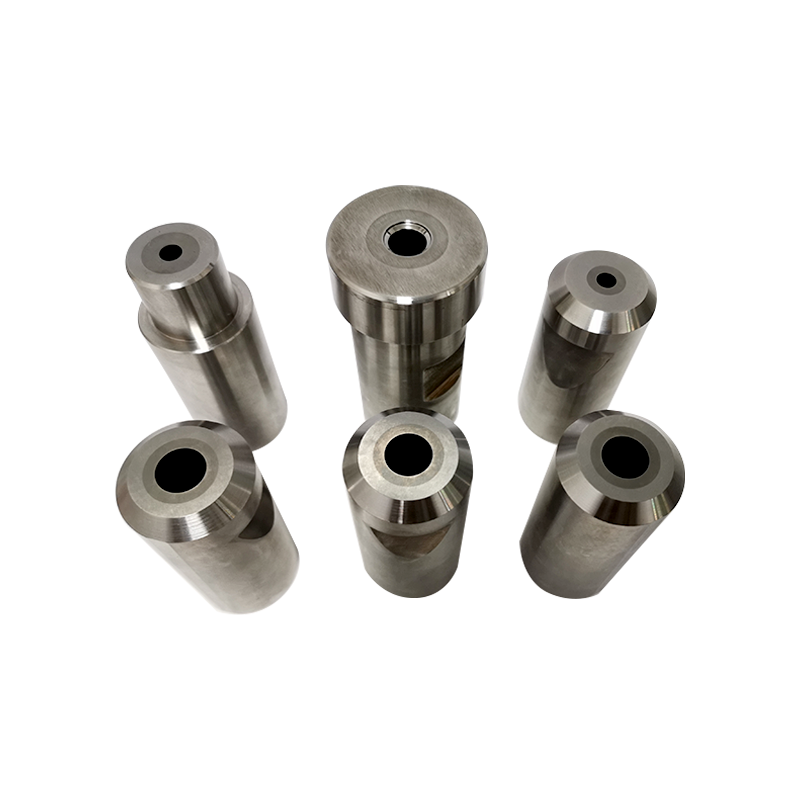
We present the technical specifications of five dominant PVD layers. This objective breakdown highlights the strengths and limits of each option. You can use these profiles to guide your tooling procurement strategy.
TiN serves as the foundational PVD coating in the industry. It provides a recognizable gold color on finished tools. The technical profile features a microhardness of 1800–2100 HV. Its oxidation onset occurs at ≥600°C (typically 640°C).
This coating works best for general-purpose applications. We recommend it for cold heading low-to-medium carbon steels. It stands as the reliable baseline choice for standard operations. It remains highly cost-effective for everyday production runs. However, TiN falls short during severe forming applications. Abrasive alloys will quickly wear through this basic layer.
TiCN steps up the performance for more demanding materials. It displays a distinct blue-gray or purple color. The hardness jumps to roughly 3,000 HV. However, its maximum thermal limit drops to 400°C.
You should choose TiCN for stainless steel fasteners. It performs exceptionally well during deep drawing operations. The addition of carbon lowers the friction coefficient significantly. This lower friction actively prevents galling in stainless applications. While it offers superior hardness, you must monitor machine heat. The lower thermal stability limits its use in high-heat environments.
TiAlN handles intense thermal stress better than most alternatives. It presents a dark violet or black appearance. The hardness profile sits at an impressive 3,300 HV. It boasts a maximum oxidation temperature of 800°C.
This layer excels in high-stress applications generating immense heat. It perfectly suits the extreme demands of Imported High-Speed Cold Heading Dies. Under high temperatures, it forms a protective aluminum oxide layer. This self-protecting mechanism extends tool life dramatically. We consider it the best choice when facing severe thermal shock.
CrN offers a unique set of metallurgical advantages. It features a bright silver metallic finish. The hardness ranges lower, typically between 1,750 and 2,000 HV. Its thermal limit reaches about 700°C.
This coating dominates applications prone to severe sticking. We use it extensively for forming copper, brass, and titanium. Despite its lower hardness, it delivers unmatched toughness. It provides excellent corrosion resistance and extremely low residual stress. CrN is the absolute best option to prevent cold welding. It stops non-ferrous metals from adhering to your tools.
AlCrN occupies the premium tier of surface treatments. It features a sleek blue-gray coloration. The hardness exceeds 3,200 HV under most testing conditions. It withstands blistering temperatures up to 1,000°C.
You need this coating for extreme high-tensile steels. Aerospace alloys also require this level of intense protection. It handles heavy-duty forming environments flawlessly. It combines aluminum's heat resistance and chromium's anti-galling properties. The high upfront cost might seem daunting at first. However, severe high-volume runs easily justify the premium investment. It succeeds where all standard coatings fail completely.
Selecting a coating requires matching it to the specific workpiece. A mismatch guarantees premature failure and increased scrap rates. We developed a straightforward chart to simplify this selection process. It aligns the primary material categories against the most effective PVD layers.
Workpiece Material Category | Recommended Coating | Primary Operational Benefit |
|---|---|---|
Low/Medium Carbon Steels | TiN (Standard) or TiCN (High Volume) | Balances cost-efficiency and reliable baseline wear resistance. |
Stainless Steels (300/400 Series) | TiCN (Standard) or AlCrN (Severe) | Lowers friction to prevent severe galling and sticking. |
Non-Ferrous (Copper, Brass, Titanium) | CrN | Provides unmatched resistance against cold welding and material pick-up. |
High-Tensile / Aerospace Alloy Steels | TiAlN or AlCrN | Combats extreme frictional heat and highly abrasive wear mechanisms. |
Always base your choice on the actual production environment. Low carbon steels run perfectly fine using standard TiN layers. High-volume runs might benefit from upgrading to TiCN. Stainless steels demand lower friction to survive the forming process. CrN remains the strict rule for non-ferrous material runs. Heavy-duty alloys always require the premium thermal stability of AlCrN.
Theoretical specifications mean nothing without proper real-world implementation. Engineers often misunderstand the physical limitations of PVD layers. You must address substrate quality before applying any advanced treatment. Ignoring these technical realities leads to catastrophic tooling failures.
Substrate quality reigns supreme in the coating process. A standard PVD layer measures only 2 to 4 microns thick. This microscopic thickness will never mask a poor surface finish. It cannot fill in existing micro-cracks on the tool. Improper heat treatment of the tungsten carbide ruins the coating adhesion. The underlying high-speed steel must be flawless. A premium coating always fails on a sub-standard die surface. Proper polishing creates the necessary foundation for success.
Edge preparation is another critical technical requirement. Sharp edges on punches cause massive stress concentrations. These sharp corners force the coating to crack under impact. You must implement micro-radiusing on all functional edges. Rounding the edges slightly relieves internal coating stress. This essential step prevents premature spalling during the heading process.
Finally, we must address stripping and re-coating limitations. Die maintenance is a harsh reality in busy factories. You can strip and recoat high-speed steel tools quite easily. However, stripping carbide substrates presents a major technical risk. The chemical stripping process often leaches cobalt from the carbide matrix. This leaching fundamentally weakens the structural integrity of the die. You must evaluate whether recoating carbide tools is truly viable.
Transforming your tooling strategy requires deliberate action. You cannot improve factory output by guessing at solutions. We recommend a systematic approach to upgrade your operations. Follow these actionable steps to optimize your tooling crib.
First, audit your current tooling failures thoroughly. Examine the scrap bin and talk to the machine operators. Determine exactly why your dies are failing today. Do they suffer from abrasive wear? You need a coating possessing higher microhardness. Are they galling constantly? You must specify a layer featuring lower friction. Do they chip along the edges? You need better substrate toughness and adhesion. Identifying the exact failure mode is crucial.
Second, run highly controlled production trials. Never switch your entire tooling inventory based solely on spec sheets. Coat a small batch of identical tools first. Put them into a standard production run. Measure the precise cost-per-100k-strikes against your current baseline tools. Document the machine uptime and the final part quality. Data must drive your final procurement decisions.
Third, partner closely with specialized tooling vendors. Generic job-shop coaters often lack deep industry knowledge. They do not understand the extreme impact forces of cold heading. Emphasize the value of working with dedicated heading experts. Specialized vendors tailor the PVD process to your exact needs. They adjust parameters to maximize adhesion and toughness.
Tooling optimization requires precise metallurgical knowledge and practical testing. We have explored the critical dimensions of surface treatments. You now understand how to match layers to specific workpieces. Implement these final takeaways to enhance your manufacturing efficiency.
There is no universal best coating for all applications. Optimal choices rely strictly on workpiece material and machine speed.
Always match the protective layer to your specific failure mode. Identify whether heat, friction, or abrasion causes the most damage.
Prioritize substrate preparation above all else. Flawless polishing and proper edge radiusing guarantee better adhesion.
Conduct controlled trials before authorizing large-scale tooling changes. Hard data proves the value of premium treatments.
We encourage engineers to act on these insights immediately. Bring your specific wear problems directly to specialized manufacturers. Discuss your stainless steel galling issues or thermal cracking problems. Ask for a customized coating recommendation tailored to your factory floor. Upgrading your tooling strategy today secures your profitability tomorrow.
A: A standard PVD layer is typically 2 to 4 microns thick. Thicker coatings are not better for high-impact applications. Excessive thickness increases internal stress within the layer. This built-up stress causes the coating to flake or spall when struck. Keeping the layer thin ensures maximum adhesion and flexibility.
A: Yes, you can easily strip and recoat high-speed steel (HSS) dies. However, recoating tungsten carbide is highly risky. The chemical stripping process often leaches cobalt from the carbide structure. This leaching creates a brittle, weakened substrate that shatters under pressure.
A: Galling often stems from issues beyond the coating itself. Your pre-coating polish might be insufficient, leaving the Ra value too high. Incorrect lubrication during the heading process also causes severe sticking. Finally, ensure the coating truly matches the workpiece material properties.
A: PVD is overwhelmingly preferred for cold heading applications. PVD uses much lower processing temperatures than CVD. This lower heat prevents the underlying steel substrate from softening. PVD also retains the sharp edge integrity crucial for precise fastener dimensions.